Saturn: The Ringed Planet

Saturn during equinox, captured by Cassini spacecraft
Saturn Facts:
• Saturn has 7 prominent rings made of ice and rock.
• It has over 140 moons, including Titan—the second-largest in the solar system.
• Saturn’s low density would allow it to float in water.
Black Holes and Galaxies: Cosmic Mysteries
https://upload.wikimedia.org/wikipedia/commons/5/5f/Black_hole_-_Messier_87.jpg alt="Black Hole" class="cosmic-image">First actual image of a black hole (M87), 2019
Galaxy and Black Hole Facts:
• Our Milky Way contains over 100 billion stars.
• At its center lies a supermassive black hole (Sagittarius A*).
• Black holes bend spacetime and trap light itself.
• There are over 2 trillion galaxies in the observable universe.
Cosmic Phenomena in the Holy Quran
The Sun: A Glowing Lamp

Captured by NASA's Solar Dynamics Observatory
Scientific Facts:
• The sun’s core reaches 15 million degrees Celsius.
• It fuses hydrogen into helium, releasing immense energy.
• It consumes about 600 million tons of hydrogen per second.
The Stars: Lamps and Guides
Star cluster in the Small Magellanic Cloud - Hubble Space TelescopeAmazing Facts:
• UY Scuti is over 1,700 times the size of the Sun.
• Stars create heavier elements through fusion.
• Around 400 billion stars are born each year in the universe.
The Moon: Light of the Night

High-resolution image of the full moon
Moon Facts:
• Average distance from Earth: 384,400 km.
• Causes tides through gravitational pull.
• Surface temperature ranges from 127°C to -173°C.
Mars: The Red Planet

True color image of Mars from ESA Mars Express
Mars Facts:
• Mars has the largest volcano in the solar system.
• Evidence suggests Mars once had water.
• A day on Mars is about 24.6 hours.
Jupiter: The Gas Giant
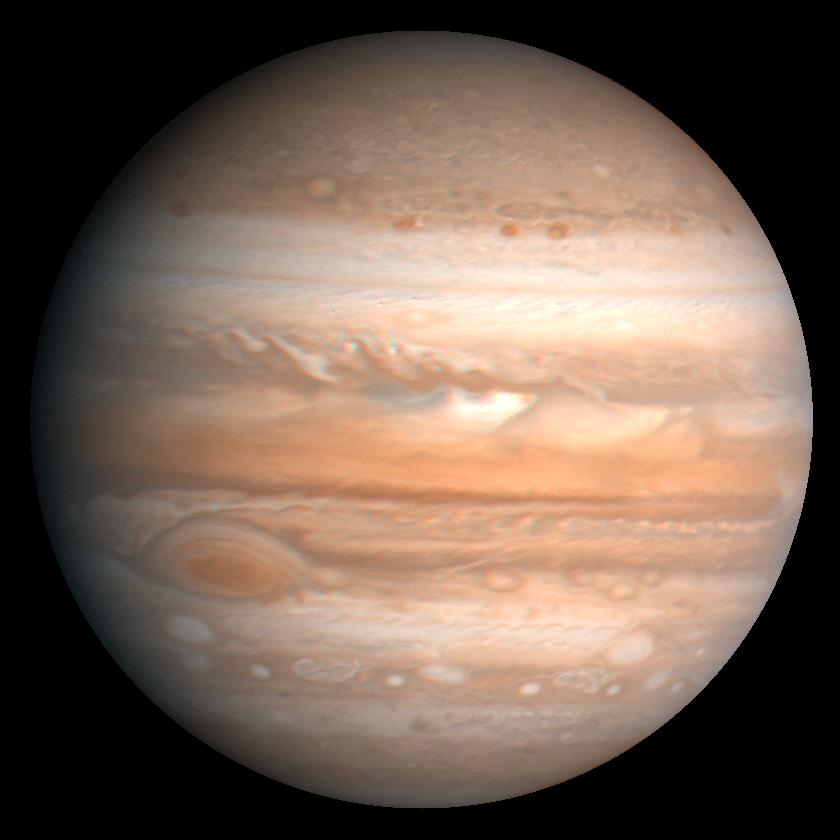
Image of Jupiter taken by NASA's Cassini spacecraft
Jupiter Facts:
• Jupiter has 79 moons, including Ganymede, the largest moon.
• Its Great Red Spot is a storm larger than Earth.
• Jupiter has the strongest magnetic field among planets.
Neptune: The Windy Planet

Image of Neptune from NASA's Voyager 2
Neptune Facts:
• Neptune has the fastest winds in the solar system.
• It has 14 known moons; Triton is the largest.
• A year on Neptune equals about 165 Earth years.
إرسال تعليق